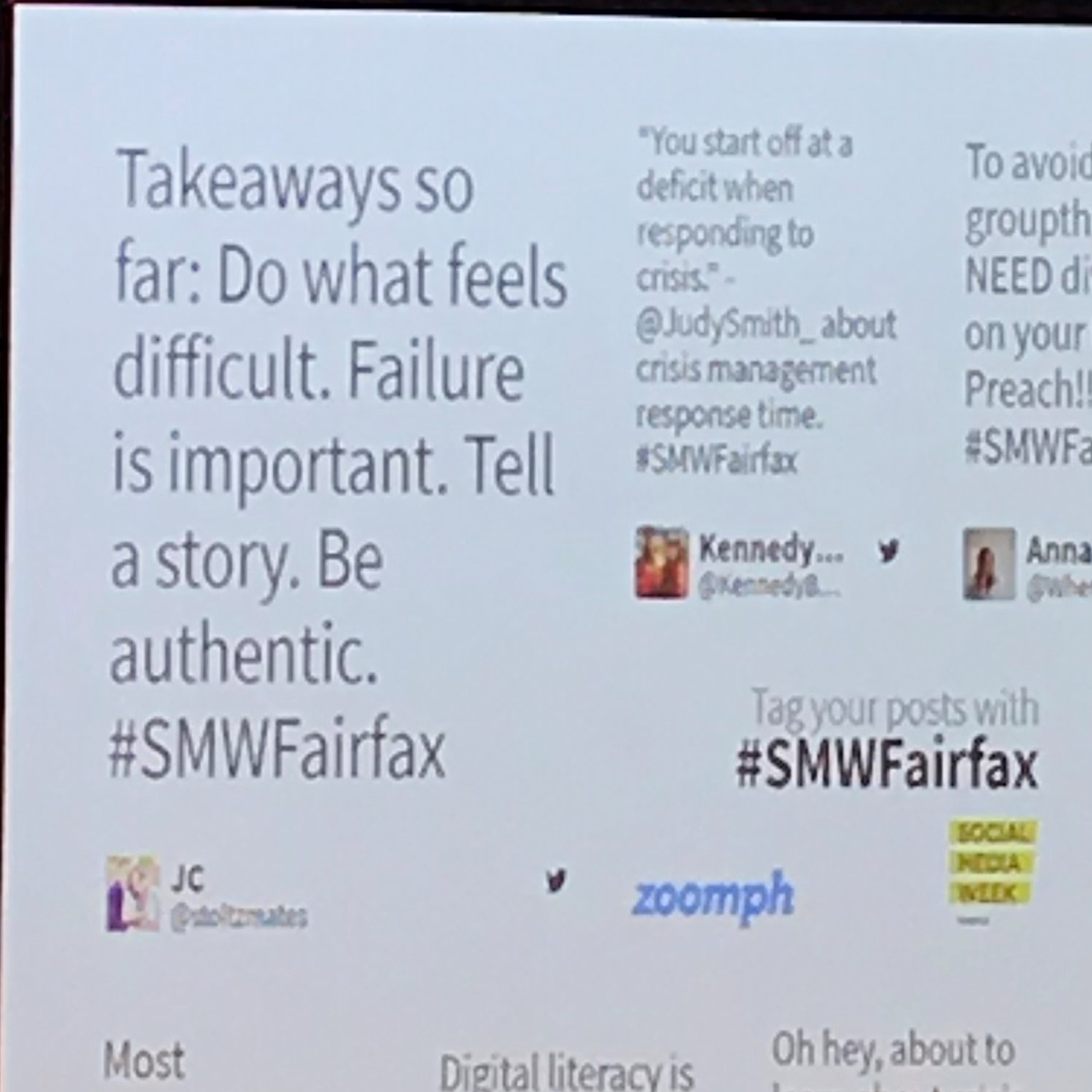
Last week I was lucky enough to head out to the Capitol One building in NoVa to attend Social Media Week Fairfax.
Besides getting a tweet on the big board, revealing my inner stoic, I heard a number of amazing speakers and gathered a lot of valuable advice. Here’s what I learned:
Be Authentic! Tell A Story!
Something I evangelize more than anything is the need for brands on social the have an air of authenticity to them. Kill the stock photos and pick up your iPhone. Tell a story with the real employees behind the brand. National Geographic (@natgeo), the #1 brand on social media today, made this point very clear in their keynote “Partnerships with Purpose: How National Geographic Became the #1 Brand on Social Media.” They give all posting opportunities on their main page to their explorers and photographers in the field, giving the fans a real glimpse into the expedition.
Have Compassion AND A Plan.
In the madness of the internet, compassion can be a hard commodity to come by. The manager of social media and digital engagement and acting web content manager of the Smithsonian National Museum of African American History and Culture (@NMAAHC), Lanae Spruce, drove the point home that even in times of division online as well as in the country, when running a social media campaign, we must approach people with compassion and education. Later in the day, the inspiration for Olivia Pope of “Scandal” fame, Judy Smith, discussed the necessity of having a plan. “If you have a plan,” she said, “you have an 80% chance of recovery.” In a crisis, you’re already behind the 8-ball, so better be prepared to work to get ahead of the madness. She also advised to “deal with problems head on in life as in work. BE DECISIVE.”
Answer “Why” First, All Will Follow.
Food Network made a full room of marketers drool for a solid 45 minutes as they played multiple short-form videos including ones on pizza skulls and Louisiana crayfish. Besides torturing us before lunch, they brought up solid points on how to curate and serve short-form videos that are equal parts predictably successful and new/innovative. The biggest thing I walked away with was “Answer the ‘why’ you’re creating this content and everything else will follow.” Other advice given was: know your primary and secondary demographics, plan the content for the platform it will live on, make content “thumb-stopping” by starting it with a beauty shot, and don’t only focus on the views, also consider the time spent watching, midroll watches, likes, comments and especially the shares.
Twitter Can Be Used For Good
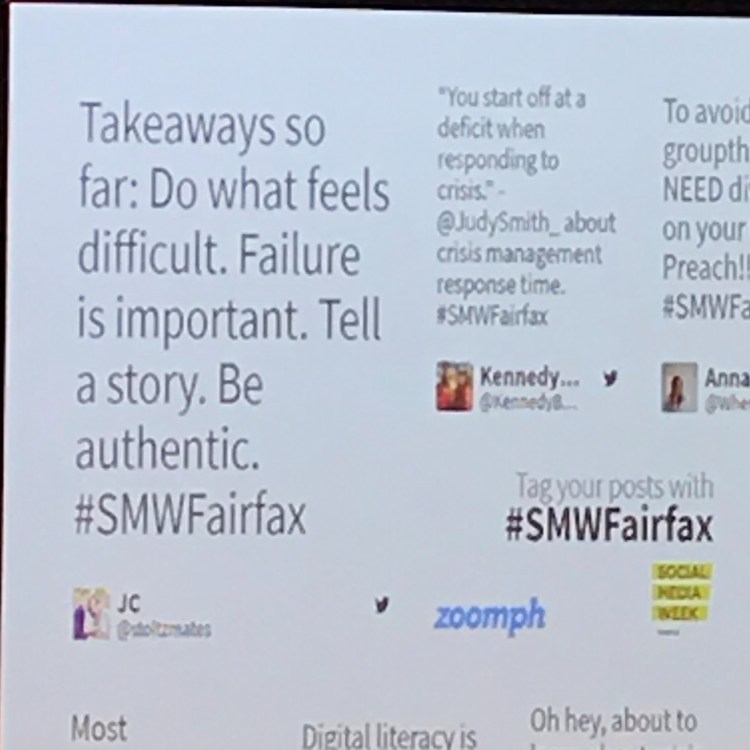
Lastly, there was a running tweet-board (photo above) that elevated the most engaged posts of the day. One that flashed up there lamented the difficulty of networking IRL. Naturally, a few of us posted to this person and offered to meet up, because (at least in my case) I was a bit nervous too! We all met for lunch and had a blast chatting about our jobs, employers, usage of social platforms, and how bad the traffic may be getting back home. Writing a few days later now, we have all connected already! Sometimes, Twitter can be used for good.
Overall, this short conference confirmed much of what I practice and preach in my own work and life and added a lot of new takeaways as well. I’m now committed to having a more compassionate outlook on my campaigns, a stronger stance on answering “why” for my content, and being decisive in all parts of what I do.
 Julie C. Stoltz