- Writing Samples
- Social Posts: Historic Hotels of America/ Historic Hotels Worldwide
- Videos: Production & Screentime
Writing Samples
Longform – “Eclipse Over Texas” Waco, TX 2024 reflection
Leadership from NASA’s Planetary Science and Astrophysics Divisions joined their divisions’ public engagement specialists in Waco for public outreach events leading up to and during the eclipse, reaching more than 14,000 people.
Planetary Science leadership began eclipse outreach activities in Waco on Friday, April 5, with talks to high-school students at the Abbott Independent School District and Waco High School. In addition, younger students attended an afternoon of talks and outreach at the South Waco Community Center. These events, conducted in partnership with the National Park Service, reached about 100 children from Title 1 schools, where teachers and students alike relayed their appreciation for the opportunity to interact with NASA scientists – and get eclipse glasses and other NASA outreach materials.
The following day, the Waco Region 12 school district hosted a k-12 STEAM event called “STEAMclipse” at the Waco Convention Center. Leadership and scientists from the two divisions were featured speakers in breakout rooms, while planetary science and astrophysics showcased their science in the exhibit hall. Both teams gave attendees eclipse and agency educational materials as well as eclipse glasses. Featured activities included making a Moon out of modeling clay, conducting a water density experiment, the Nancy Grace Roman Space Telescope mobile video game, and an exhibit on transits. In addition, excess NASA science materials were donated to local teachers, the public library, and the 4H Club, which is studying the Sun. Some 3,000 people were estimated to have attended and, notably, the average time spent at the event was 168 minutes.
On Sunday, April 7, then-Planetary Science Director Lori Glaze and Astrophysics Director Mark Clampin spoke to a standing-room-only crowd preceding a performance by the Waco Symphony Orchestra of a selection from Holsts’ “The Planets” and thematic music from popular science-fiction movies and television shows. NASA science was featured in a write-up in the concert program, and planetary images from the agency’s missions were shown during concert programming and intermission. Eclipse glasses were also distributed by NASA outreach staff prior to the performance, for which 2,142 tickets were sold.
On eclipse day, NASA joined Lowell Observatory, Baylor University, and the city of Waco for the “Eclipse Over Texas” at the university’s McLane Stadium. There was huge enthusiasm for the two NASA tents , with a line wait time of up to 40 minutes. On the astrophysics’ side, scientists walked up and down the line answering questions and talking about the eclipse. To keep them further entertained in the heat, we tried to gamify the wait. With SMD eclipse-specific stickers declaring you #TeamEarth, #TeamMoon, or #TeamSun, those waiting were told to choose a team out of Sun and Earth and receive the Moon sticker inside the astrophysics tent. This incentivized them to continue waiting in order to collect all three stickers. In the planetary tent, hands-on activities included the Moon sculpture and water density experiment from STEAMclipse the day before, as well as Sun corona painting with UV paint, and making planetary bouncy balls. The planetary team also brought large stand-up “NASA” letters displayed in front of the tent, which were popular for photographs with fun planet- and eclipse-themed handheld cutouts. In addition to presentations on two stages throughout the day by division leadership and scientists, astrophysics gave a talk on the James Webb Space Telescope in Spanish. Many of the presenters were also interviewed for local media coverage. Attendance at the stadium event was 9,585 – slightly lower than anticipated, but considerable given the forecast for dangerous storms that afternoon.
NASA made the eclipse special for thousands of people not only from Waco and greater Texas but also Puerto Rico, Brazil, the UK, and across these United States. By the end of the weekend, the total estimate reached was 14,500 touchpoints in person, excluding media reach. It was an extraordinary event to be a part of, both in respect to the unique opportunity of seeing a true totality as well as the opportunity to bring NASA science to an often-overlooked location.
Press Release: King Tut Visits DC
February 22, 2023, Washington, D.C.– A club based in Washington, D.C. has many intrinsic benefits merely on location. Not only is the University Club of D.C. local to the United States seats of power, being down 16th Street from the White House, but merely blocks further are some of the most illustrious museums in the world. Along the National Mall, the Smithsonian Institute and accompanying museums stand sentinel. One of the most visited and oldest is the National Museum of Natural History. Featuring a huge stuffed pachyderm in the atrium (named Henry) and the “cursed” Hope Diamond amongst its many exhibits, it is a sight to behold. The ringmaster of this historic big top is Kirk Johnson, PhD.
Johnson is an American paleontologist, author, curator, and museum administrator, and is currently serving as Sant Director of Smithsonian’s National Museum of Natural History (NMNH). The University Club of D.C. was lucky enough to host Dr. Johnson for an evening lecture hosted by the Literature & Arts Committee. Dr. Johnson has his doctorate in geology and paleobotany from Yale University. “The Smithsonian is really [the United States’] first [national] investment in science,” Johnson said, “and now there are 20 [Smithsonian] museums. Think, our government wraps itself in museums. How great is that?”
“I became a finder of things, and once you become a finder of things, there’s no turning back because it becomes a superpower. Give me five minutes and I’ll find an arrowhead.” Johnson reminisced about his childhood in Washington State that fostered his interest in paleobotany. Finding now-gone deciduous trees, currently only found in Asia, in western Washington roadsides let his interest blossom. He wrote to Leo Hickey and Scott Wing at the Smithsonian; respectively, these men turned Johnson’s doctoral advisor and his academic contemporary later in his career.
“I did the math– equivalent to 12% of the entire population of the United States has been to the National Museum of Natural History.” The NMNH has more than 148 million objects and specimens. These collections hold our collective history. From ancient dinosaurs, to 800 lb. Arkansas crystal, to the National Mosquito collection (motto “know the vector, know the threat.”), to pickled gorillas, the National Museum of Natural History truly has the history of the world.
The “Recovering Voices” project works with language speakers across the world. More intimately to culture, since 2010, 854 individuals, 116,236 funerary objects, and 3 sacred objects have been repatriated or made available for repatriation to Native Peoples in North America. The David H. Koch Hall of Time does something different than other fossil exhibits: it shows not only history but also looks into our future. History, natural and human, informs our collective future. “Make us a legitimate climate curve,” the NMNH asked paleoclimatologists. Referencing the past to read the future, they saw the absolute rise of the global climate. “We have a global challenge ahead of us, and only museums will be a part of the solutions to change the world.”
“We’re knowing more, we’re getting better, and we’re more precise,” Johnson states on the nature of modern discoveries, “science does get better, and that means we get precise views of the future.” Dr. Johnson offered the University Club of D.C. members a limited behind-the-scenes tour of the NMNH on March 7, 2023. Reservations required.
About the University Club of Washington, D.C.
Established in 1904, The University Club of Washington, DC is one of the nation’s most historic membership organizations. It has the honor of consistently being recognized as a Distinguished Club of the World and was most recently ranked among the nation’s Top 15 City Clubs in 2021-2022. The University Club attracts members and guests from the private, public, and nonprofit sectors and also includes clergy and foreign nationals.
In addition to excellent dining, fitness, squash, a day spa, and fellowship within a superbly maintained and historic clubhouse, The University Club offers members and their families a full schedule of social events, intellectual presentations, and diverse cultural programs. Members also have access to recently renovated overnight rooms and a reciprocal network of more than 200 of the finest clubs in the world.
More information on The University Club of Washington, D.C., may be found on: Facebook • Instagram • LinkedIn • Twitter • YouTube
Short form article: What is a “blowing rock”?
According to local legend, two star-crossed lovers from the Chickasaw and Cherokee tribes courted along the Blue Ridge Mountains and around The Blowing Rock. As their flirtations continued, a conflict was brewing. The Chickasaw woman was drawn to The Blowing Rock one day as the sky turned red, and her lover foresaw this omen as one of a future filled with conflict and trouble. He felt compelled to return to the Plains, but she begged him not to leave. Torn between head and heart, the man leapt from the Blowing Rock to the forest far below. Heartbroken by the loss, the woman prayed to the Great Spirit daily until one evening as the sky again turned red, a gust of wind blew her beloved up from the forest floor, onto the Blowing Rock and into her arms.
The unique airflow of Blowing Rock causes the winds to gust almost completely vertical. This is more than likely due to the unique shape of the rock itself which is 4,000 ft. above sea level and juts over 3,000 ft above the Johns River Gorge. The wind currents whip up and often blow vertically and cause light objects to “float” in the sky. It was named by the infamous Ripley’s Believe It or Not cartoon as “the only place in the world where snow falls upside down.” This geological structure, made of 1,055 million year old metamorphic gneiss rock has been officially designated The Blowing Rock Gneiss by Geological Survey of The United States.
The Green Park Inn is located less than half a mile from The Blowing Rock where visitors can hike up to the look out. The entire trail is about a half mile long and takes an average of 20 minutes to complete. Grounds are pet friendly and majority handicap accessible.
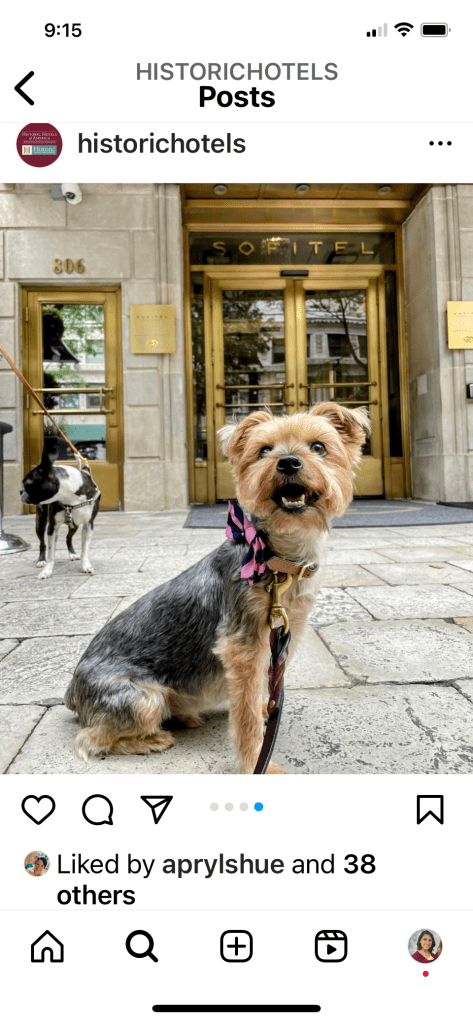
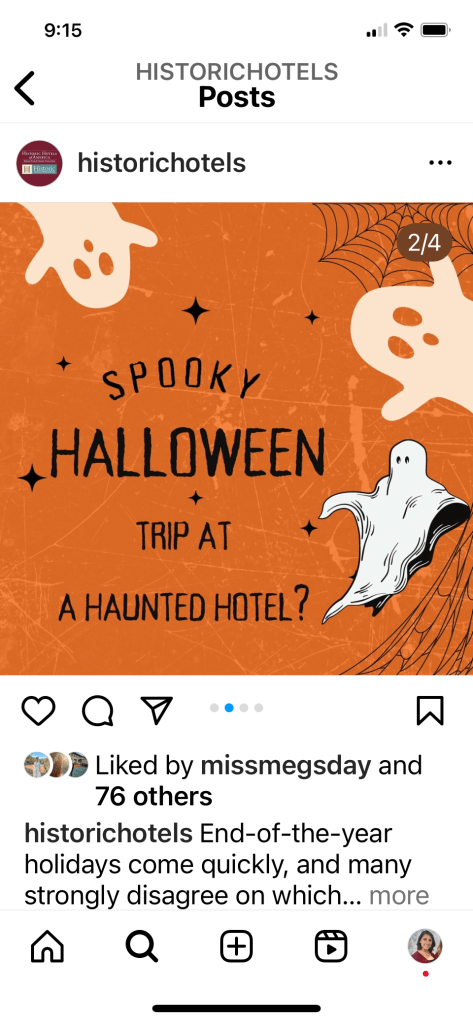
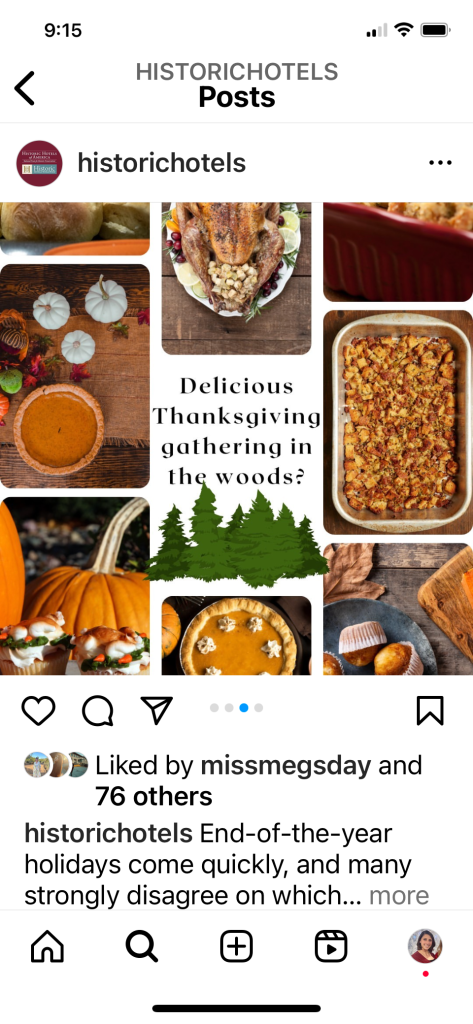
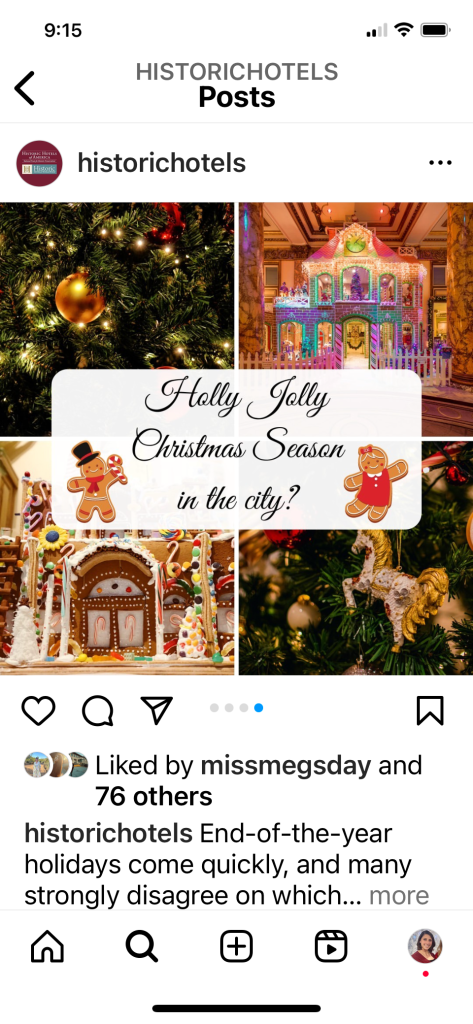
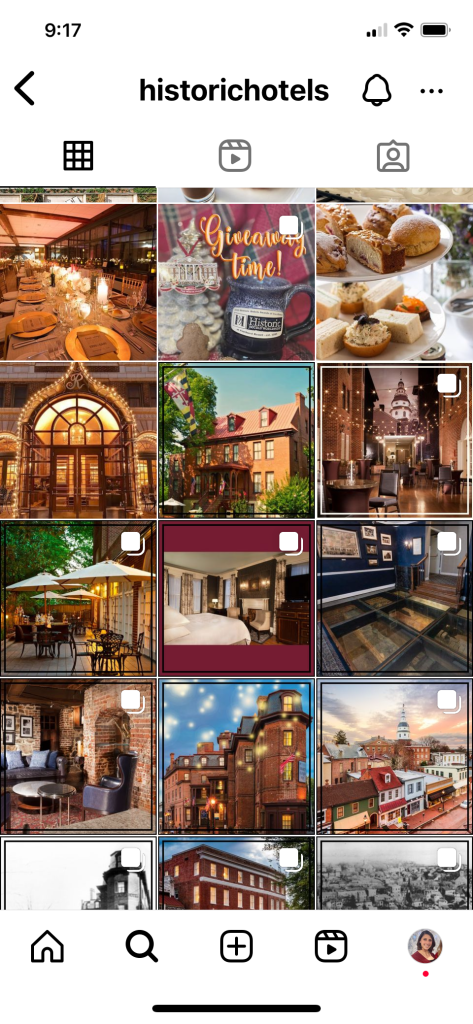
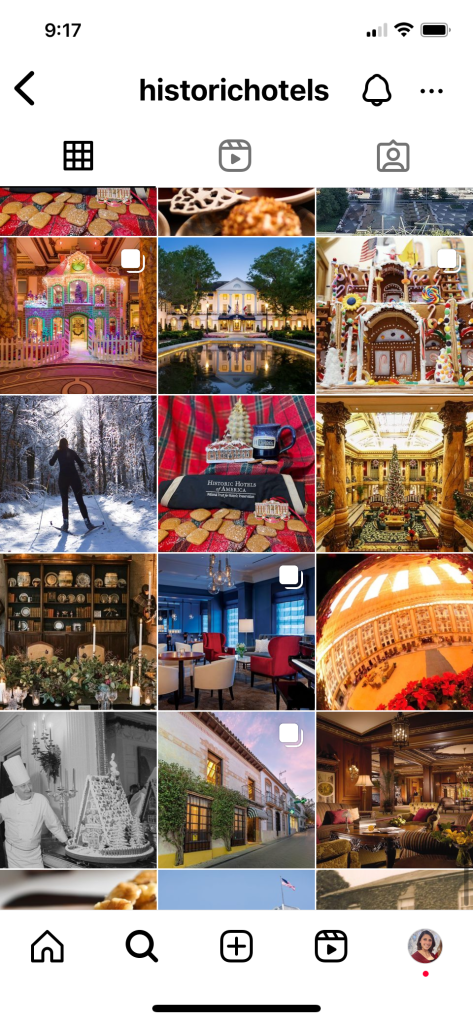
Social Posts: Historic Hotels of America/ Historic Hotels Worldwide
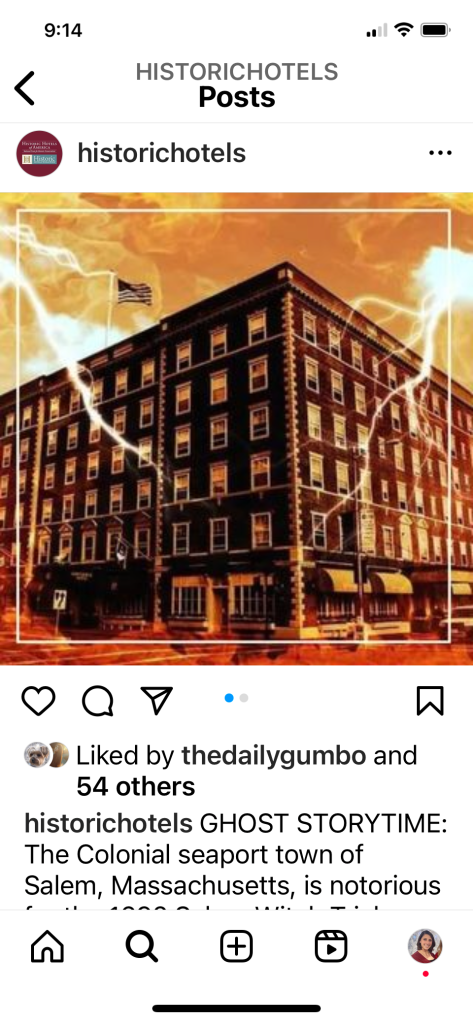
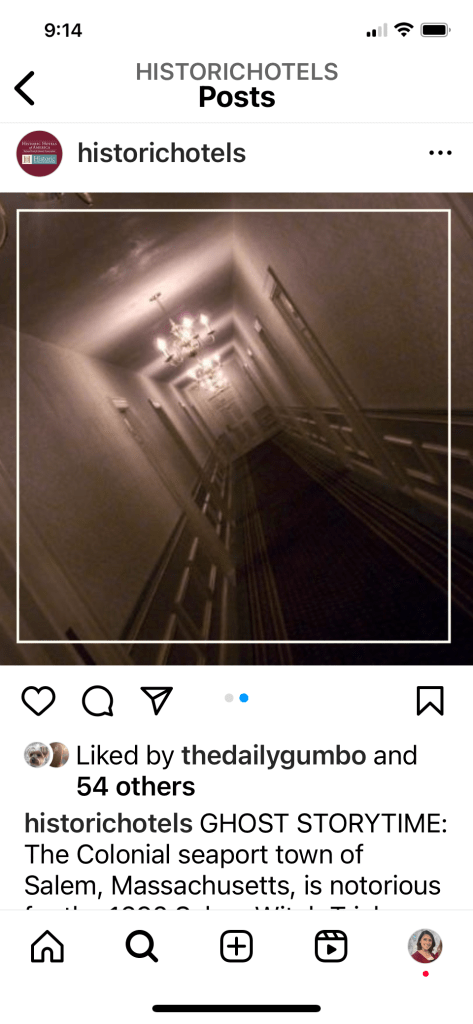
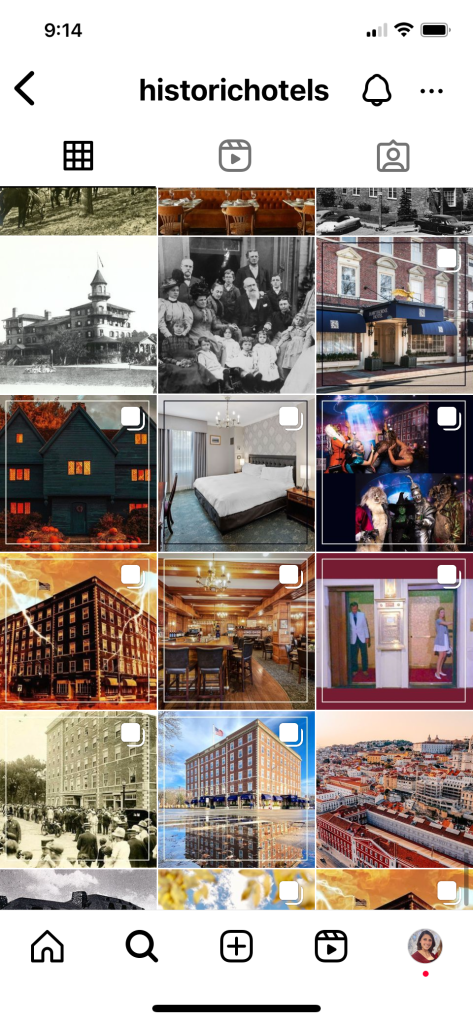
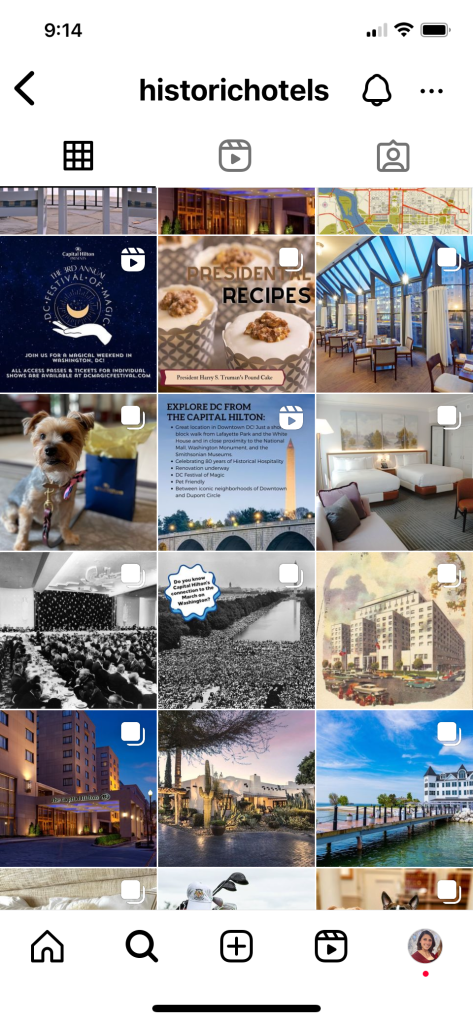
Goal: Engage new audiences looking to learn about and travel to historic locations staying in historic hotels. Focused on all cultural aspects of the properties (history, food, traditions, gardens, hauntings) to bring in both B2B audiences (new hotel members) and new B2C audiences (new guests booking through HistoricHotels.org).
Success: Referral traffic increased to site 70% via social (Meta (Facebook and Instagram), Twitter, Pinterest, Tiktok, Linkedin) and 100% via email YOY (ConstantContact). Posts and content were aligned to monthly newsletters, pay-for-placement Instagram Takeovers, and seasonal themes.



Videos: Production & Screentime
Goal: Harness audience boredom and expert availability during early COVID-19 pandemic to create unique and interactive content for top funnel acquisition. Funnel that interest into on-website recommended “Learning Paths” for further consumption behind the paywall.
Success: The Great Courses Live/ Wondrium Live ran from 03/2020-12/2021, creating over 100 hours of new content and gaining ample engagement growth (success metric) and supporting the Facebook acquisition portfolio. New user trends like pandemic browsing and new content supported this qualified user growth. Social Editorial calendars had been paired with Learning Paths, a series of interest-based “curriculum” to limit decision paralysis, in 2020 and became a great way to motivate people to learn. The Learning Paths landing page became the most visited page on the now-defunct TheGreatCoursesDaily behind the homepage. These strategies were supported by email campaigns and hero rotations on the SVOD and a la carte websites and properties.
Interview with General Wesley Clark, Ret., Military Historian
Interview with Dr. Robert Greenberg , Music Historian
Interview with Dr. Steven Ressler, Engineer
Interview with Dr. Sean Carroll, Theoretical Physicist
Great Women of History Roundtable
Interview with Dr. Edwin Barnhart, Archeologist
Interview with Dr. Bob Brier, Egyptologist
All The Great Courses/Wondrium live videos here.
 Julie C. Stoltz